Chinese Learning| Hanfu: A Timeless Reflection of Chinese Culture

Hanfu: A Timeless Reflection of Chinese Culture
Welcome to Scinorhythm Classroom! This article, exclusively published by ScinoRhythm, is about Chinese Learning| Hanfu: A Timeless Reflection of Chinese Culture. This article involves many terms related to traditional Chinese culture and may be slightly challenging. It is suitable for Chinese learners with an HSK3 or higher level of proficiency. If you enjoy ScinoRhythm's courses, feel free to subscribe to our private tutoring sessions and enjoy various discounts.#Chinese learning #Mandarin language learning #Affordable online Chinese courses #Mandarin native teacher #HSK #Hanfu #Ming Dynasty #Tang Dynasty #Han Dynasty
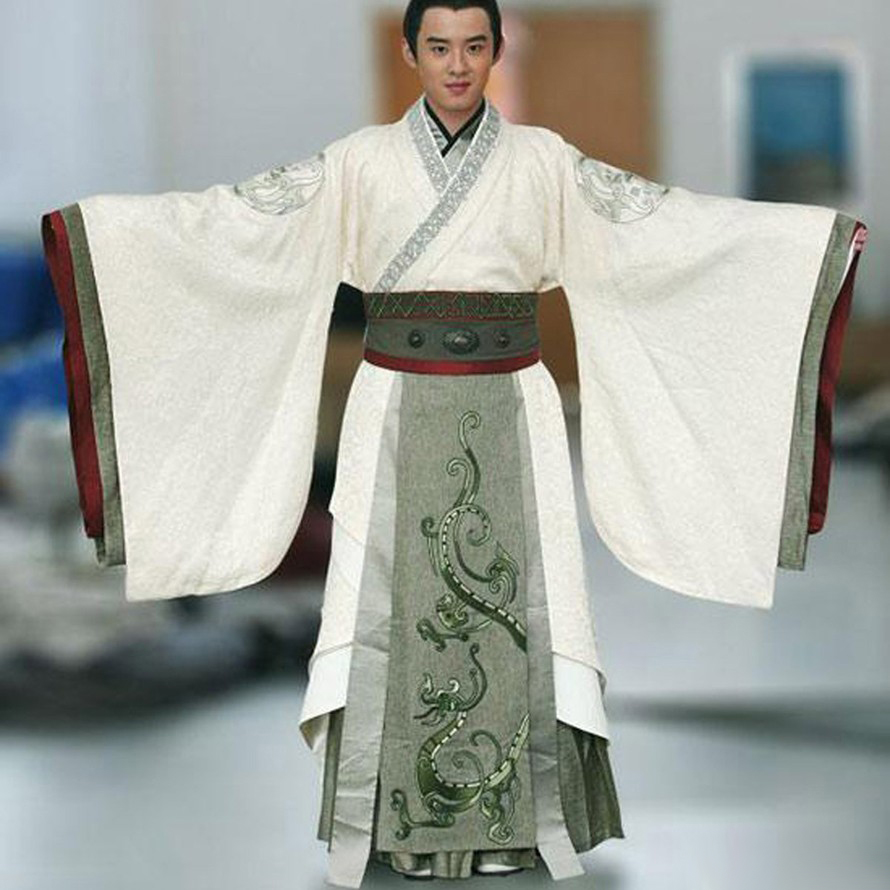
Hanfu, the traditional clothing of the Han ethnic group in China, has become a vibrant symbol of cultural revival in modern society. Its designs are deeply rooted in historical dynasties, with contemporary trends favoring styles from the Han, Tang, Song, and Ming dynasties. This article explores the characteristics of these popular styles and their cultural significance.
1. Han Dynasty (206 BCE–220 CE) Hanfu
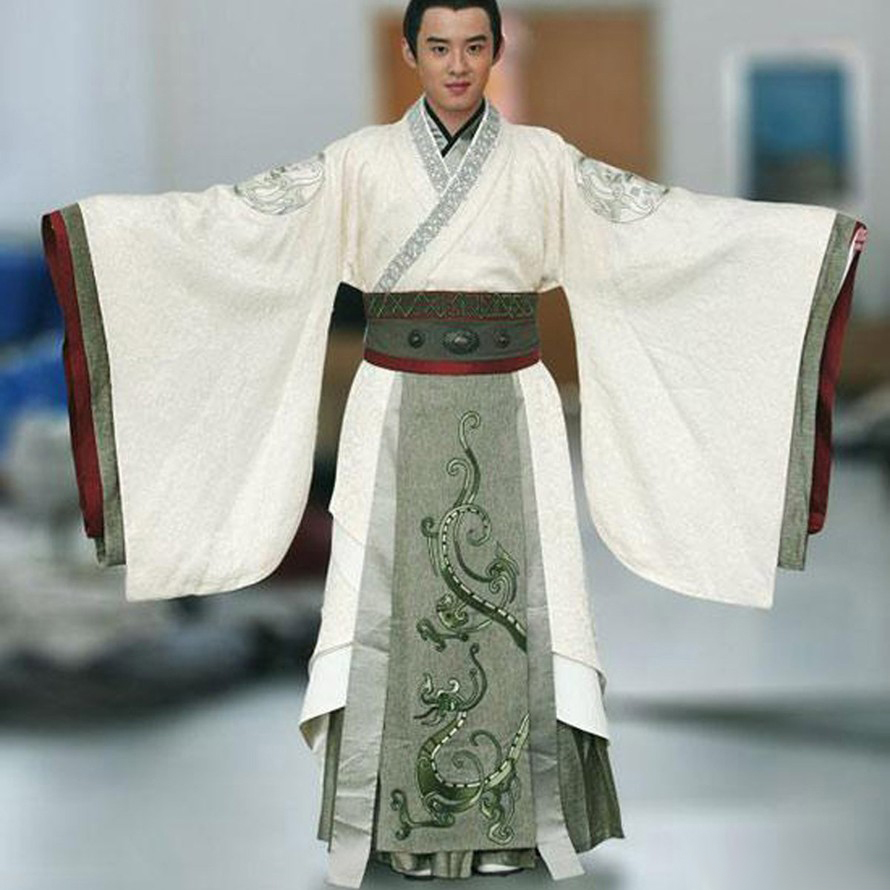
The Han Dynasty established the foundational system of Hanfu, characterized by right-side lapel (右衽[yòu rèn]) and crossed collar (交领[jiāo lǐng]) designs. Two key styles are the straight-hem robe (直裾[zhí jū]) and the curved-hem robe (曲裾[qū jū]). The curved-hem robe, with its long, flowing skirt wrapped around the body, symbolizes the elegance of ancient rituals. The Han Dynasty also popularized the deep robe (深衣[shēn yī]), a one-piece garment combining upper and lower wear, reflecting the Confucian ideal of harmony between body and nature.
2. Tang Dynasty (618–907 CE) Hanfu
Tang Dynasty Hanfu is renowned for its openness and cosmopolitan flair. Women’s fashion featured wide-sleeved gowns (大袖衫[dà xiù shān]) paired with high-waisted sashes (束腰[shù yāo]) and petticoats (裙[qún]). The crossed-collar robe (圆领袍[yuán lǐng páo]) became the standard for men, often paired with baldric-like sashes (蹀躞带[dié xiè dài]). These styles mirrored the Tang’s cultural confidence and interactions with Central Asian and Silk Road influences.

3. Song Dynasty (960–1279 CE) Hanfu
Song Dynasty Hanfu emphasized simplicity and practicality. Women wore butterfly-sleeved jackets (褙子[bèi zi]) over tunic-dress ensembles (襦裙[rú qún]), while men favored straight-collared robes (直领[zhí lǐng]). The pleated skirt (百迭裙[bǎi dié qún]), with its layered fabric, showcased the era’s appreciation for subtle beauty. This period reflected the influence of Neo-Confucianism, which prioritized modesty and restraint.

4. Ming Dynasty (1368–1644 CE) Hanfu
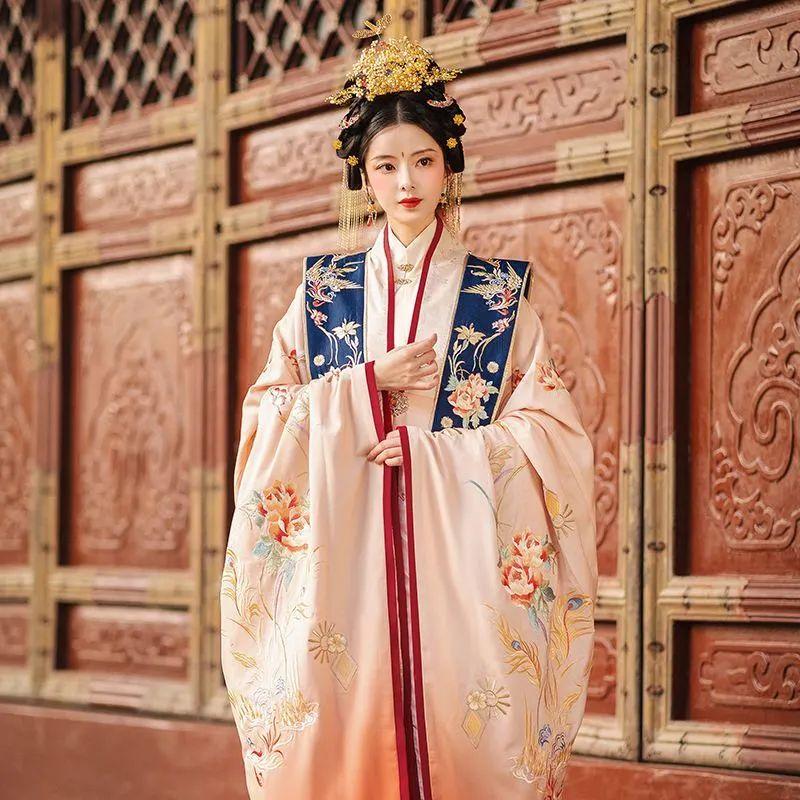
Ming Dynasty Hanfu reached new heights in craftsmanship. The horse-face skirt (马面裙[mǎ miàn qún]), with its pleated front and solid back, became iconic. Men’s arrowhead collars (比甲[bǐ jiǎ]) and women’s embroidered jackets (比甲[bǐ jiǎ]) highlighted the era’s intricate embroidery and bold patterns. Ming styles also incorporated elements from Mongol and Tibetan cultures, showcasing the dynasty’s multicultural identity.
Cultural Origins and Global Influence
Hanfu’s evolution reflects China’s historical shifts, from the ritualistic rigor of the Zhou Dynasty to the global exchanges of the Tang. Its crossed-collar (交领) and right-side lapel (右衽) design, symbolizing moral order, influenced neighboring cultures like Korean hanbok and Japanese kimono. Today, Hanfu enthusiasts worldwide celebrate these styles as a bridge between tradition and modernity.
Glossary of Terms
Right-side lapel (右衽[yòu rèn]): A garment style where the right side overlaps the left, symbolizing order in Chinese culture.
Example: "Traditional Hanfu always uses a right-side lapel design."
示例:传统汉服总是采用右衽设计
Crossed collar (交领[jiāo lǐng]): A V-shaped neckline formed by overlapping front edges of a garment.
Example: "The crossed collar is a key feature of Hanfu."
示例:交领是汉服的重要特征。
Straight-hem robe (直裾[zhí jū]): A robe with a straight hemline, popular in the Han Dynasty.
Example: "She wore a straight-hem robe for the historical reenactment."
示例:她在历史重现活动中穿了一件直裾长袍。
Curved-hem robe (曲裾[qū jū]): A robe with a wraparound, curved hem, common in early Han Dynasty.
Example: "The curved-hem robe was a symbol of ancient Chinese nobility."
示例:曲裾长袍是古代中国贵族的象征。
Deep robe (深衣[shēn yī]): A one-piece garment combining upper and lower wear, representing harmony.
Example: "The deep robe was worn during important ceremonies."
示例:深衣常用于重要仪式。
Wide-sleeved gown (大袖衫[dà xiù shān]): A robe with exaggerated sleeves, typical of Tang Dynasty fashion.
Example: "Tang Dynasty women loved wide-sleeved gowns for their elegance."
示例:唐代女性喜爱大袖衫,因为它优雅大方。
Sash (束腰[shù yāo]): A belt used to cinch the waist of a garment.
Example: "The sash helped define the silhouette of Tang Dynasty dresses."
示例:束腰有助于勾勒唐代服饰的轮廓。
Pleated skirt (百迭裙[bǎi dié qún]): A layered, pleated skirt from the Song Dynasty.
Example: "The pleated skirt added movement to Song Dynasty attire."
百褶裙为宋代服饰增添了动感。
Horse-face skirt (马面裙[mǎ miàn qún]): A Ming Dynasty skirt with a pleated front and solid back.
Example: "The horse-face skirt is a favorite among Hanfu collectors."
示例:马面裙是汉服收藏家们的心头好。
Arrowhead collar (比甲[bǐ jiǎ]): A sleeveless jacket with a pointed collar, worn in the Ming Dynasty.
Example: "He wore an arrowhead collar over his robe for a formal event."
示例:他出席正式场合时,在长袍外披了一件比甲。